Yellow Iris
What is it? Yellow Iris (Iris pseudacorus) is a non-native perennial plant in the iris family, which the Maine Natural Areas Program has identified as “severely invasive”. Yellow iris blooms in May-July with yellow flowers, reproduces via rhizome (root) fragments, and through the production of hundreds of seeds that can float and form new colonies elsewhere. All parts of the yellow iris, especially the rhizomes, are toxic to animals and humans if ingested.
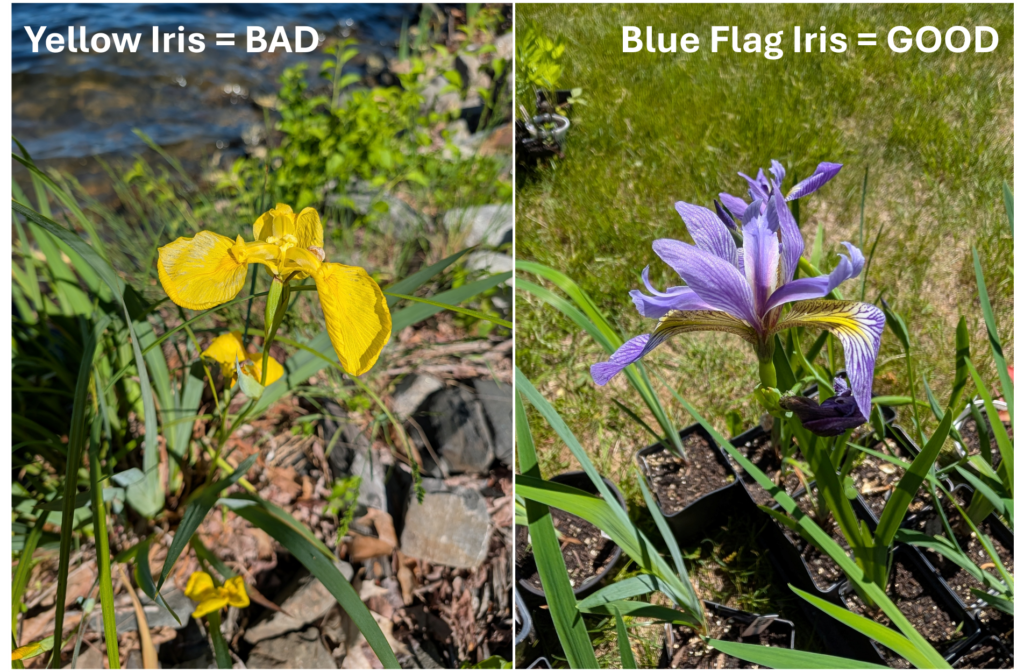
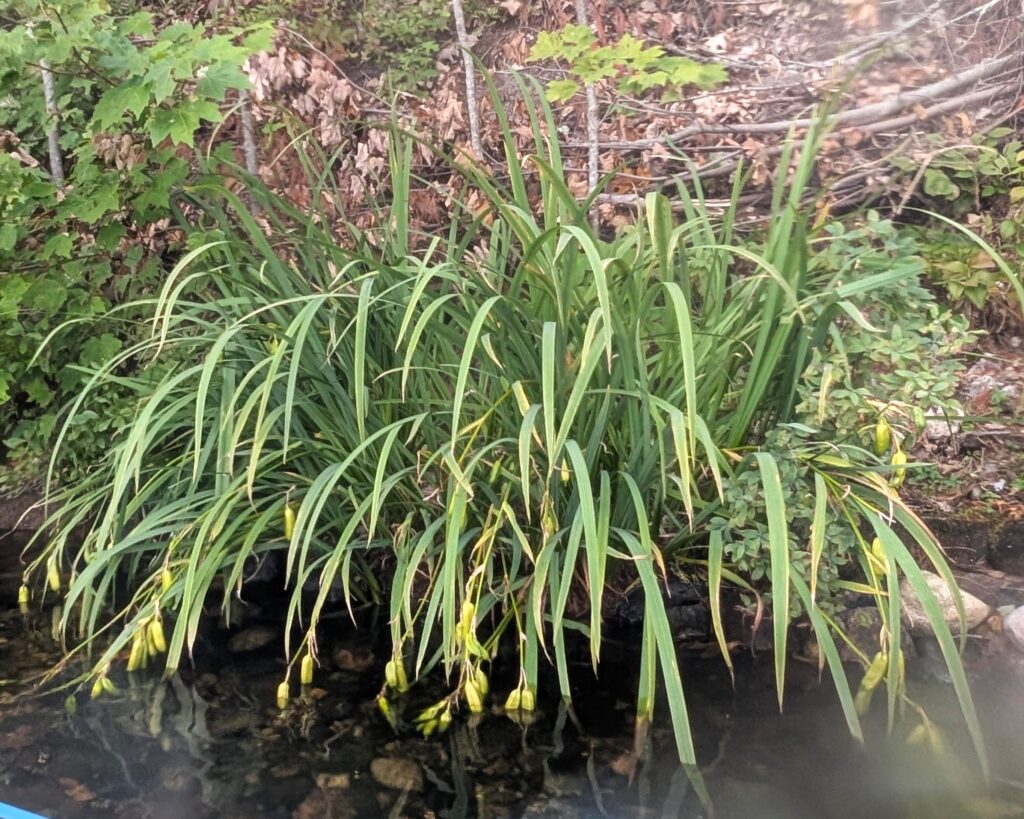
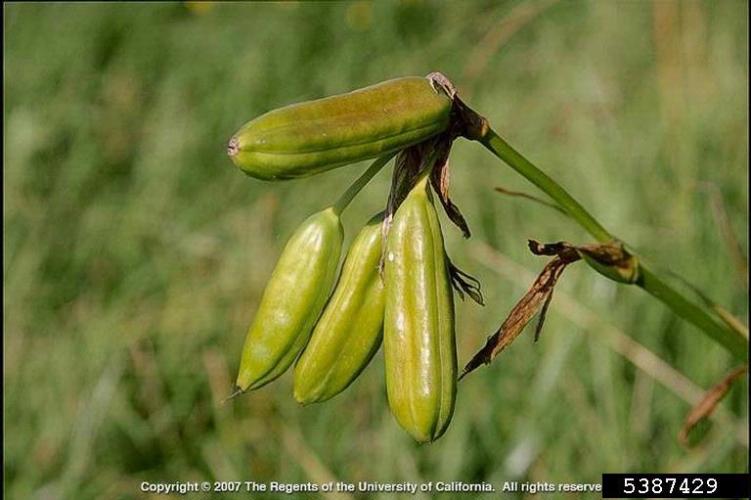
How do you identify it? Yellow iris produces yellow flowers in spring and large green,
glossy seed pods in the late summer-fall. Yellow iris leaves are flattened, bladelike, and
arranged in a fan, and can grow 1-5 feet tall. The leaves have a defined midrib or mid-
vein, which sets them apart from similar-looking plants like cattail (Typha spp.) or native
blue flag (Iris versicolor).
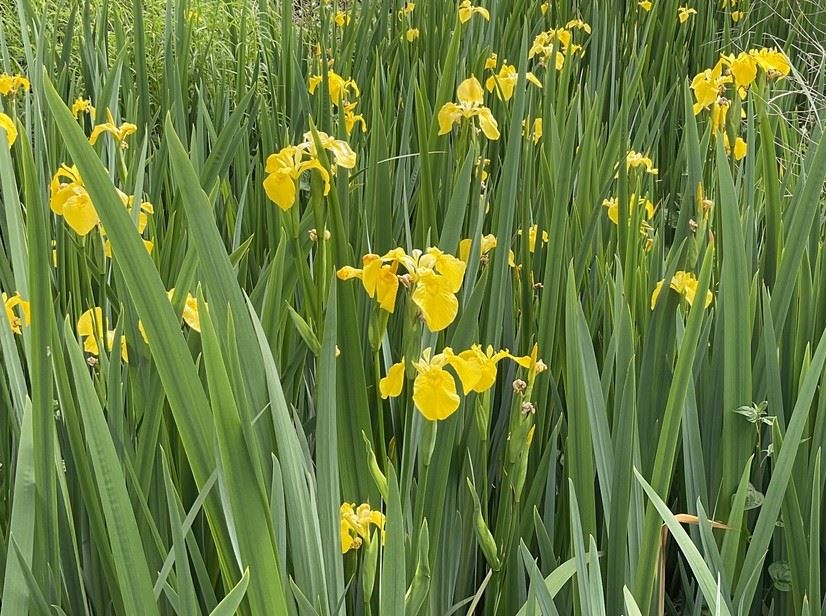

Why is it a problem? Yellow iris forms thick mats that can cut off sunlight, lower native
plant diversity, and reduce areas of deeper water needed by fish and waterfowl. Yellow
iris impacts water quality by reducing water flow and increasing sedimentation, creating
suitable habitat for itself and other invasive plant species. Like other invasives, such as
bittersweet and purple loosestrife, it displaces native plants needed by wildlife and the
health of the lake.
Where is it on Watchic Lake? Yellow iris is widespread around the Watchic shoreline. Watchic Lake Association (WLA) volunteers have mapped the lake to identify the current yellow iris locations (see map). In September 2025, WLA volunteers removed hundreds of seed pods from the existing plants they identified around the lake to slow the spread. Seed pods and plant material were taken to the Standish dump for incineration.
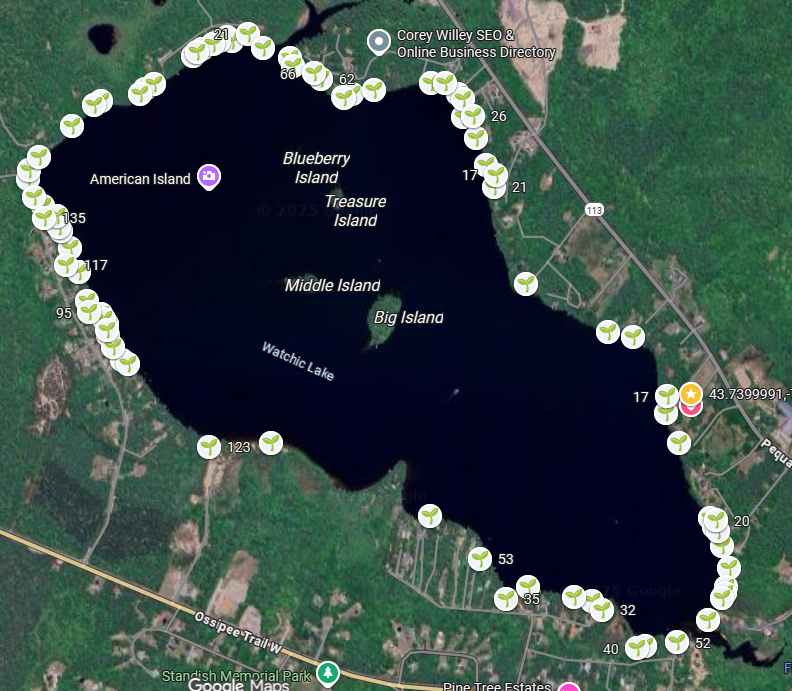
September 2025
What you should do:
If you have yellow iris, here are the steps you can take to cut them back or remove them. If you would like help with removal, reach out to us and we can help! watchiclakeassociation@gmail.com.
- Easiest – Deadhead, cut back the yellow blooms. Place all plant material in a trash bag and take to the town dump for incineration. Deadheading needs to be done before the end of August to ensure seed pods don’t spread.
- Medium Difficulty – Cut back the leaves and stems to the ground. Place all plant material in a trash bag and take to the town dump for incineration. This may be the best option for large, sprawling plants. Plants will need to be re-cut periodically.
- More Difficult, but most effective – Pull out roots or reddish tuber (thick root). This is fairly easy for small plants, they will pull right out. Or use a 6-inch serrated kitchen knife or hori-hori gardening knife to cut around the stem of the plant into the root system. Try to minimize the hole you dig on the shoreline to prevent erosion. Place all plant material in a trash bag and take to the town dump for incineration.
- Check out our training video below for iris removal tips!
For additional Information about Yellow Iris, we recommend this report by the Ontario Invasive Plant Council.